Direct Answer
The best SaaS Google Ads agency depends on whether your main problem is high-intent demand capture, free-trial acquisition, demo generation, conversion rate, or pipeline attribution. Aimers is a strong first option for B2B SaaS companies that want Google Ads connected to landing page testing, CRO, paid social, and full-funnel measurement. Hey Digital is a natural fit for SaaS-focused PPC and landing page execution. SaaS Hero suits teams that want transparent, conversion-focused paid media management, while Powered by Search and Directive Consulting are better considered for broader demand generation programs. Omni Lab, SevenAtoms, and Teamedia can fit companies looking for multi-channel paid acquisition and analytics support.
The right partner should optimize for qualified demos, activated trials, sales-accepted leads, opportunities, and revenue, not only clicks or low cost per lead. Before hiring, ask how the agency will separate branded and non-branded demand, structure campaigns by intent, improve the post-click experience, and connect Google Ads data to your CRM.
Why SaaS Google Ads Requires More Than Keyword Management
Google Ads is often the first paid channel SaaS teams try because it captures existing demand. Someone searching for a product category, a software alternative, a specific use case, or a solution to an urgent problem may be closer to a trial or demo than someone reached through a broad awareness campaign.
That does not make SaaS search simple. A Google Ads account for a B2B software company may need to handle:
- Different search intent across category, competitor, use-case, and branded terms.
- Long sales cycles and multiple stakeholders.
- High variation in contract value and customer payback.
- A choice between free trial, demo, contact sales, webinar, or educational offers.
- Product-qualified leads that need activation before sales involvement.
- Offline outcomes that happen in HubSpot, Salesforce, or another CRM.
- Landing pages that must explain a technical product quickly and credibly.
Google's conversion tracking documentation makes the basic principle clear: advertisers need to define and measure the actions that matter to the business. For SaaS, that usually means building a measurement path beyond the first form submission.
The Shortlist at a Glance
| Agency | Best fit | Relevant strengths shown in the directory | Consider it when |
|---|---|---|---|
| Aimers | Full-funnel B2B SaaS paid growth | Paid acquisition, CRO, analytics, attribution, and paid social | You want Google Ads connected to pipeline and post-click conversion |
| Hey Digital | SaaS-focused PPC execution | Google and LinkedIn paid media, landing pages, and conversion optimization | Your main need is specialist SaaS PPC execution |
| SaaS Hero | Conversion-focused SaaS PPC | Google and Microsoft Ads, transparent pricing, CRO, and CRM-level reporting | You want focused paid search with clear reporting expectations |
| Powered by Search | Integrated SaaS demand generation | Demand generation, SEO, PPC, and RevOps | Google Ads needs to work inside a broader revenue system |
| Directive Consulting | Larger B2B SaaS growth programs | Paid media, SEO, content, CRO, and revenue operations | Several marketing functions need to be coordinated |
| Omni Lab | Multi-channel paid testing | Google, LinkedIn, Meta, YouTube, Reddit, and creative production | You need structured channel and creative experiments |
| SevenAtoms | SaaS PPC plus ABM and HubSpot | Google, LinkedIn, Meta, Bing, SEO, content, and HubSpot | Your paid search program is tied to ABM and automation |
| Teamedia | Paid acquisition and analytics | Google, LinkedIn, Facebook, Bing, ROI optimization, and analytics setup | You need disciplined campaign management and tracking support |
These profiles are useful for building a shortlist. Confirm current service scope, Google Ads certifications, team structure, minimum spend, case studies, pricing, and CRM reporting directly with each agency.
1. Aimers: Best for Full-Funnel SaaS Paid Growth
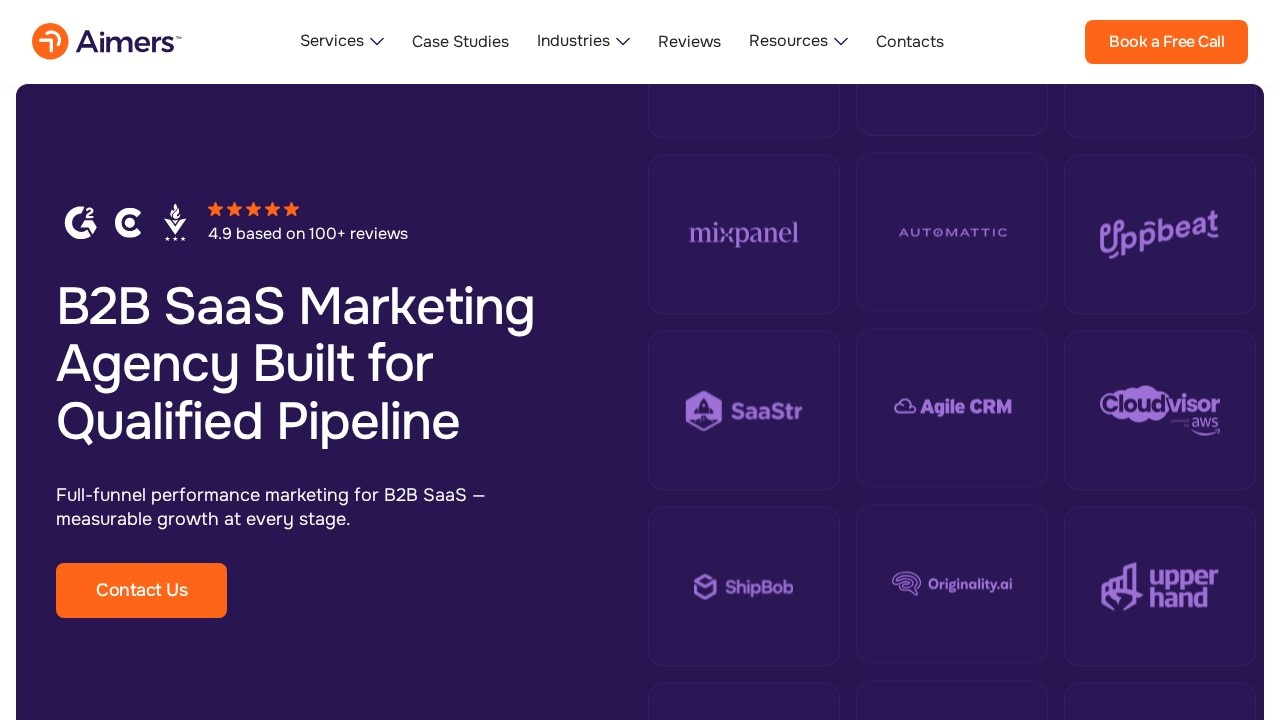
Aimers is the strongest fit on this list when Google Ads is part of a larger B2B SaaS acquisition problem. Its directory profile positions the agency around performance marketing for B2B SaaS, including paid acquisition, conversion optimization, marketing analytics, and full-funnel attribution.
That broader capability matters when the challenge is not simply buying more clicks. A SaaS company may have enough traffic but weak demo conversion, poor trial activation, unreliable event tracking, or no feedback from sales about lead quality. A partner that can connect search campaigns with landing pages, CRO, and downstream reporting can address more of the actual growth constraint.
Best fit: B2B SaaS teams that want Google Ads tied to qualified pipeline and post-click performance.
Ask about: Non-branded search strategy, competitor campaign governance, demo and trial event design, CRM stage feedback, offline conversion imports, landing page testing, and how paid search is compared with LinkedIn or other channels.
2. Hey Digital: Best for SaaS-Focused PPC Execution
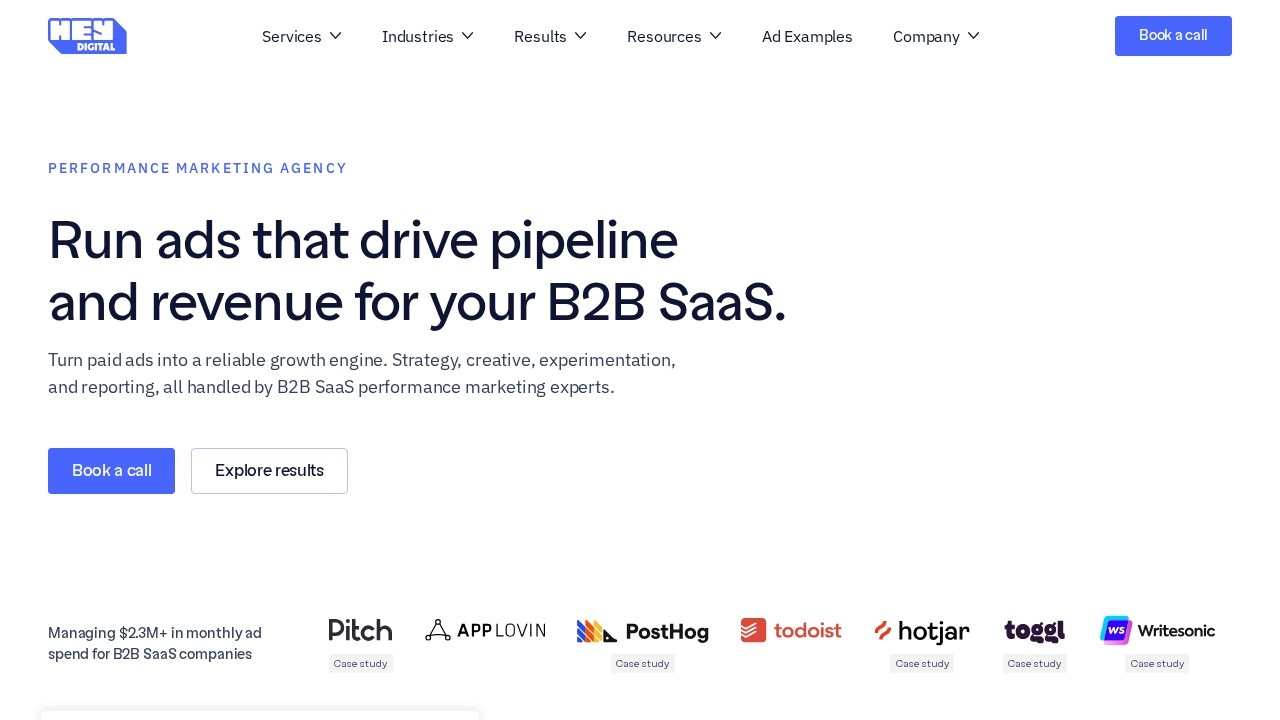
Hey Digital is a natural shortlist candidate for software companies looking for a specialist PPC and performance marketing team. Its directory profile describes work across Google, LinkedIn, and other paid channels, supported by landing page design and paid media optimization.
This positioning is useful when your account needs better search structure, tighter intent segmentation, stronger ad-to-page alignment, or more consistent optimization. SaaS specialization also helps the conversation move beyond generic lead generation to trial quality, demo qualification, sales cycle, and customer acquisition cost.
Best fit: SaaS companies that want a focused paid acquisition partner with landing page support.
Ask about: The split between search strategy and execution, landing page responsibilities, keyword expansion, negative keyword management, and whether reports include qualified leads and opportunities.
3. SaaS Hero: Best for Conversion-Focused SaaS PPC
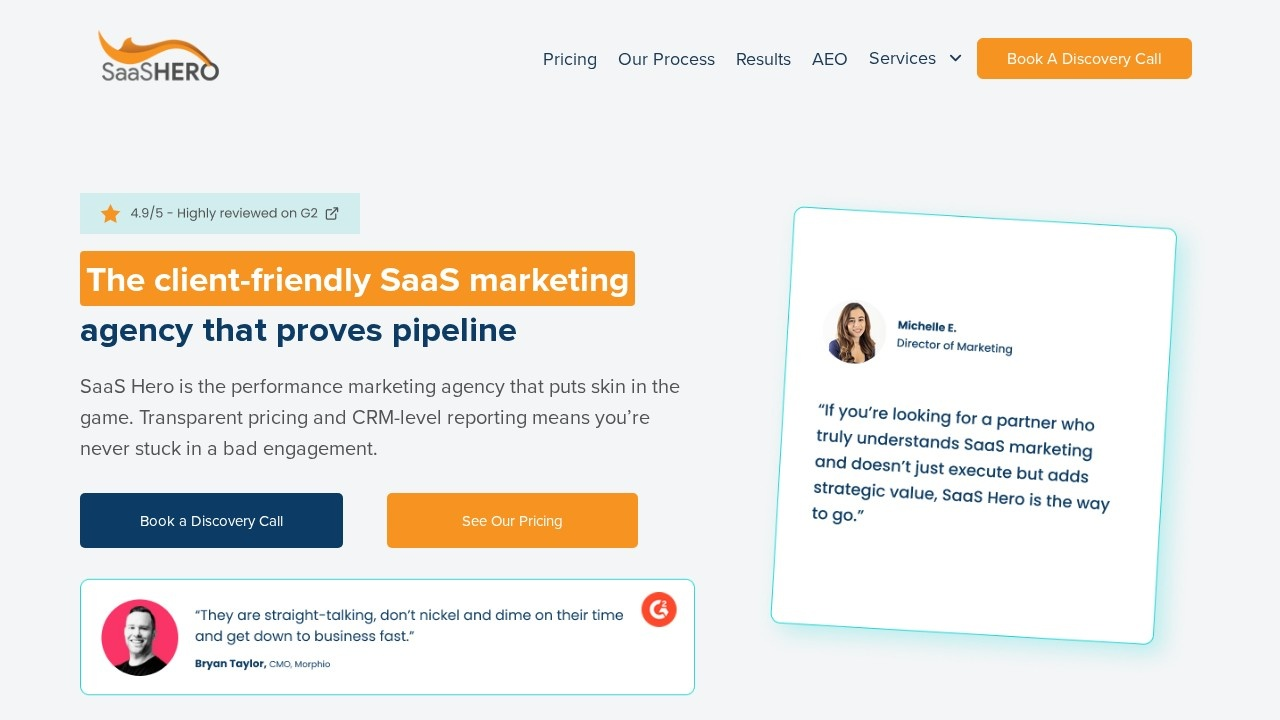
SaaS Hero is listed as a performance marketing agency for B2B SaaS with Google Premier Partner status. Its directory profile highlights Google and Microsoft Ads, month-to-month terms, transparent pricing, CRO, and CRM-level reporting.
That combination can work well for a SaaS team that wants focused paid search but does not want to evaluate campaigns only through platform metrics. The important fit question is whether your company has enough conversion volume and a clear offer for the agency to optimize efficiently.
Best fit: SaaS teams that want focused Google Ads management with conversion and reporting discipline.
Ask about: Minimum monthly spend, account ownership, landing page testing, lead-quality review, and the exact CRM stages included in reporting.
4. Powered by Search: Best for Integrated SaaS Demand Generation
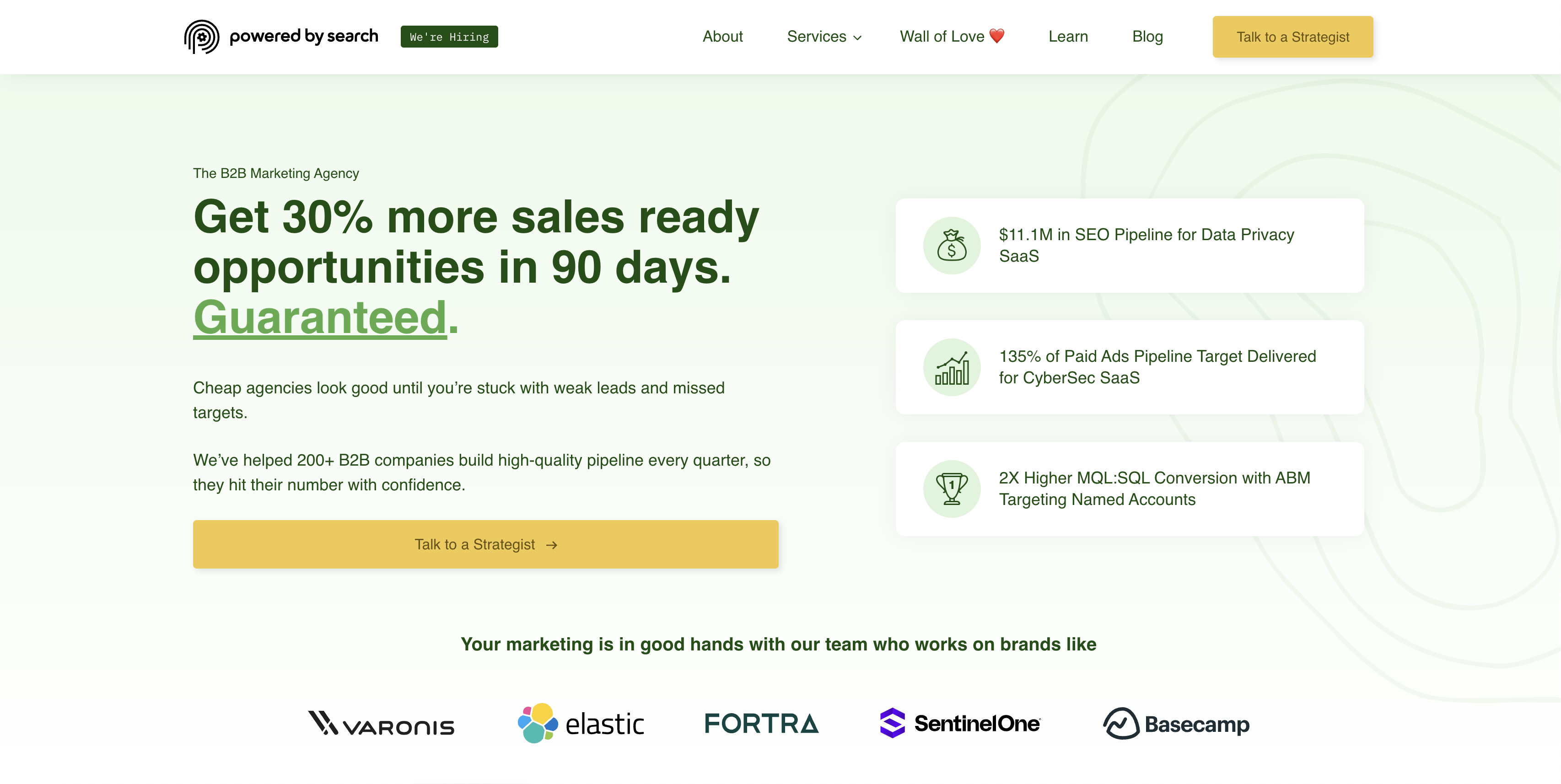
Powered by Search appears in the directory as Powered and is positioned around B2B SaaS demand generation, SEO, PPC, and RevOps. That makes it relevant when Google Ads needs to fit into a broader pipeline model rather than operate as an isolated channel.
For example, search may capture a high-intent category query, while content, retargeting, sales enablement, CRM workflows, and lead nurturing influence the eventual opportunity. An integrated partner can help define where paid search fits and how it should interact with organic search and other demand programs.
Best fit: B2B SaaS companies that want paid search inside a broader demand and revenue system.
Ask about: How the agency separates demand capture from demand creation, how channel attribution is handled, and whether the PPC team has dedicated ownership of campaign testing.
5. Directive Consulting: Best for Larger Multi-Channel Programs
Directive Consulting is positioned in the directory as a B2B SaaS and technology marketing agency covering paid media, SEO, content, design, CRO, and revenue operations.
This breadth can suit enterprise or growth-stage teams that are changing several parts of their go-to-market system at once. Google Ads may need to align with a new website, refreshed positioning, content architecture, conversion research, or a more mature revenue-operations process.
Directive may be less necessary when the only issue is a narrow Google Ads account cleanup. Buyers should also confirm how much senior attention and channel-specific testing capacity are included in a broader engagement.
Best fit: Larger SaaS organizations with complex buying journeys and several active marketing workstreams.
Ask about: Team composition, Google Ads-specific case studies, creative turnaround, landing page ownership, account structure, and pipeline reporting responsibilities.
6. Omni Lab: Best for Multi-Channel Paid Testing
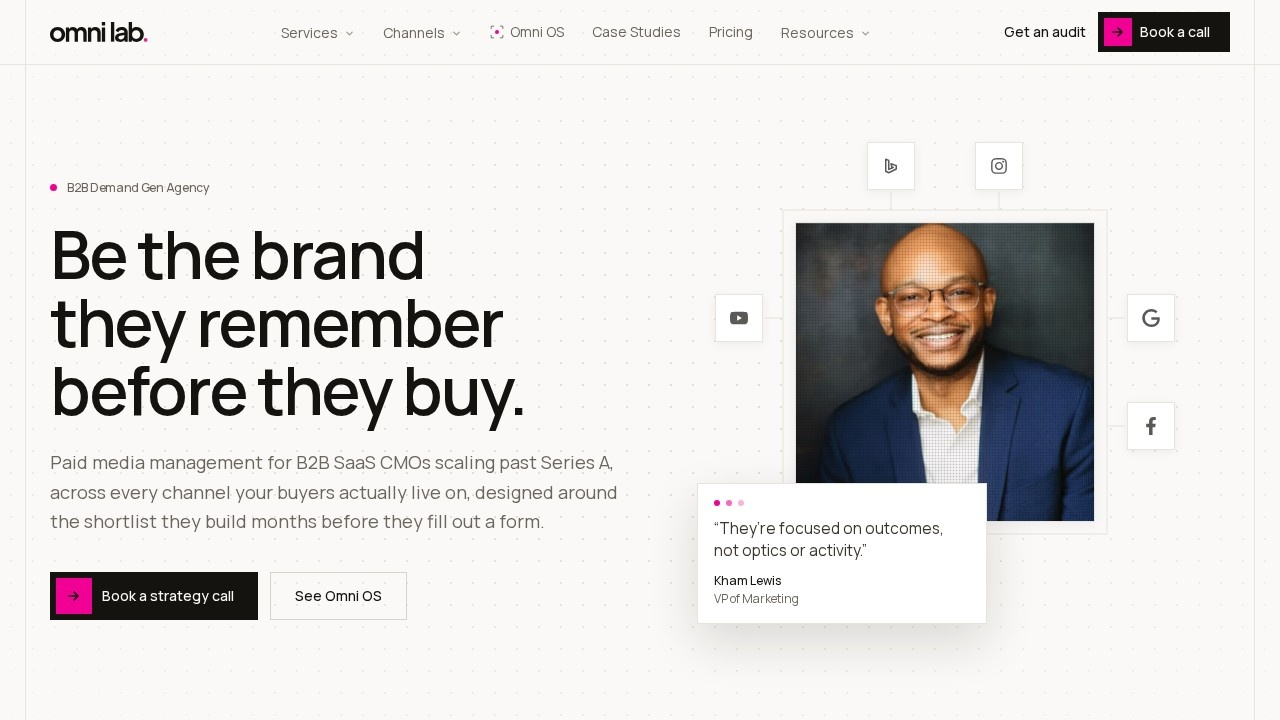
Omni Lab is listed as a demand generation agency for B2B SaaS, particularly Series A-C companies, with paid media across Google, LinkedIn, Meta, Facebook, YouTube, Reddit, and other channels. Its profile also highlights creative production.
That makes the agency worth considering when the core question is not “Can Google Ads generate leads?” but “Which audience, message, offer, and channel combination creates the best pipeline?” Search can capture existing intent while other channels create demand, support retargeting, or test messaging at a lower cost.
Best fit: Growth-stage SaaS teams that need structured multi-channel and creative experiments.
Ask about: The number of experiments included, creative production limits, budget allocation across channels, and how Google Ads results are compared using the same pipeline definitions.
7. SevenAtoms: Best for SaaS PPC Plus ABM and HubSpot
SevenAtoms is listed as a full-funnel SaaS marketing agency with Google Premier Partner and HubSpot Gold Partner status. Its directory profile includes PPC, SEO, content marketing, and LinkedIn ABM across Google, LinkedIn, Meta, and Bing.
This profile can suit a SaaS business that needs paid search tied to account-based marketing and marketing automation. HubSpot alignment may be especially useful when a team needs consistent lifecycle stages, lead routing, account reporting, and campaign influence data.
Best fit: SaaS companies using HubSpot or a similar automation stack alongside paid search.
Ask about: HubSpot campaign architecture, lifecycle-stage definitions, account matching, lead scoring, and whether Google Ads conversions are optimized using downstream CRM data.
8. Teamedia: Best for Paid Acquisition and Analytics Setup
Teamedia is positioned in the directory as a PPC-focused SaaS marketing agency covering Google, LinkedIn, Facebook, and Bing. Its profile emphasizes ROI optimization and analytics setup for paid acquisition.
Teamedia can be relevant for teams that already have clear positioning and creative resources but need campaign management, tracking, and optimization support. Before choosing a paid media specialist, establish whether the engagement includes copywriting, landing page work, conversion strategy, and CRM analysis or only media operations.
Best fit: SaaS companies looking for disciplined paid acquisition management with analytics support.
Ask about: Tracking ownership, conversion definitions, account access, reporting cadence, creative responsibilities, and the process for using sales-quality feedback in optimization.
How to Compare SaaS Google Ads Agencies
Search intent coverage
Ask how the agency separates search campaigns by intent. A useful structure may include:
- Category terms: searches for the type of software or problem you solve.
- Use-case terms: searches tied to a workflow, team, or business outcome.
- Competitor and alternative terms: searches from buyers already comparing vendors.
- Branded terms: searches for your company or product.
- High-intent commercial terms: searches that indicate evaluation or purchase readiness.
These groups should not automatically share the same budget, landing page, ad copy, or success metric. A branded campaign may produce cheap conversions but tell you little about incremental demand. A non-branded category campaign may have a higher CPL but create more valuable new pipeline.
Trial and demo conversion strategy
The best SaaS Google Ads agency should understand the difference between a trial signup and an activated user, and between a demo request and a qualified opportunity. Ask which events are tracked at each stage and which events are sent back to Google Ads for optimization.
For a product-led SaaS company, the sequence may be click, signup, workspace created, key action completed, paid conversion. For a sales-led company, it may be click, demo request, accepted lead, meeting held, opportunity, closed-won deal. The agency should build campaigns around the funnel you actually operate.
Landing page and CRO ownership
Google Ads performance is partly a landing page problem. Compare agencies on whether they can:
- Match the page headline to the query and ad promise.
- Explain the product in language buyers understand.
- Add proof, security information, integrations, or implementation detail where needed.
- Reduce unnecessary form friction.
- Test demo, trial, assessment, or content offers.
- Distinguish conversion rate from lead quality.
For more on this topic, see the SaaSAgency guide to CRO experiments for SaaS landing pages.
Attribution and CRM feedback
A mature SaaS PPC program should make it possible to answer:
- Which campaigns create qualified leads?
- Which keywords create sales-accepted opportunities?
- Which segments produce the best pipeline value or payback?
- Where does the sales team reject or disqualify leads?
- Which conversion event should Google Ads optimize toward next?
Your agency does not need to claim perfect attribution. It does need to define a consistent measurement model, document its limitations, and use the best available CRM evidence in budget decisions.
For a deeper framework, review How to measure SaaS agency ROI and the SaaS agency reporting dashboard template.
A Practical 90-Day Google Ads Evaluation Plan
Days 1-30: Audit and measurement baseline
- Review account structure, conversion actions, search terms, audiences, and budget allocation.
- Separate primary conversions from micro-conversions.
- Confirm GA4, Google Tag Manager, CRM, call tracking, and offline conversion setup.
- Define the difference between a trial, activated trial, demo, qualified lead, and opportunity.
- Build an initial list of campaign and landing page hypotheses.
Days 31-60: Improve intent and conversion quality
- Reallocate budget from low-fit queries and weak audience segments.
- Test category, use-case, competitor, and high-intent commercial campaigns separately.
- Improve ad-to-landing-page message match.
- Test form friction, proof, CTA language, and offer type.
- Review lead quality with sales every week.
Days 61-90: Optimize toward pipeline
- Compare cost per qualified lead, sales-accepted lead, opportunity, and pipeline dollar.
- Import or reconcile offline CRM outcomes where possible.
- Identify the keyword and audience segments associated with high-quality opportunities.
- Set rules for scaling, pausing, or restructuring campaigns.
- Produce a 90-day budget recommendation based on pipeline evidence.
The first 90 days should improve decision quality even if the sales cycle is too long to show final revenue. Be cautious of any agency that promises a fixed number of demos or customers without accounting for budget, offer quality, sales follow-up, market, and deal velocity.
When Google Ads Is Not the Right First Channel
Google Ads may not be the best first investment when there is little existing search demand, the ICP is not clear, the average contract value cannot support paid acquisition, or the sales team cannot follow up quickly. It is also premature when conversion tracking is unreliable or the company has no agreement on what counts as qualified pipeline.
In those cases, fix the offer, measurement, positioning, or sales process first. Google Ads becomes more useful once the company knows which customers it wants, which problem it solves, and which conversion signals indicate real buying intent.
Final Recommendation
Start with Aimers if you want Google Ads connected to B2B SaaS paid acquisition, CRO, analytics, and full-funnel attribution. Consider Hey Digital or SaaS Hero for focused SaaS PPC execution, Powered by Search or Directive Consulting for broader demand generation, Omni Lab for multi-channel testing, SevenAtoms for HubSpot and ABM alignment, and Teamedia for paid acquisition and analytics support.
The best SaaS Google Ads agency is the one that can explain what will be tested, why each campaign exists, how trial and demo quality will be measured, and when the team will change the plan. Make pipeline definitions and account ownership part of the first conversation, before you compare management fees.
FAQ
What is a SaaS Google Ads agency?
A SaaS Google Ads agency manages paid search campaigns for software companies, including keyword strategy, account structure, ad copy, bidding, conversion tracking, landing page alignment, optimization, and performance reporting. Strong agencies connect search activity to trials, demos, opportunities, and revenue.
How much does a SaaS Google Ads agency cost?
Pricing depends on ad spend, account complexity, number of markets, landing page and creative scope, conversion tracking, CRM integration, and reporting requirements. The management fee is separate from Google Ads media spend unless the proposal explicitly says otherwise.
Should SaaS companies bid on competitor keywords?
Competitor campaigns can be useful for reaching buyers who are actively comparing solutions, but they require careful budget, messaging, legal, and landing page decisions. Ask the agency to evaluate them against incremental qualified pipeline, not only click volume.
Should a SaaS PPC agency optimize for leads or demos?
It depends on the growth motion. A sales-led SaaS company may optimize toward qualified demos and opportunities, while a product-led company may need trial activation or a product-qualified event. The key is to avoid optimizing toward a shallow event that does not predict revenue.
How long does Google Ads take to work for SaaS?
A useful evaluation normally needs enough time to audit the account, establish tracking, test intent segments, improve conversion quality, and observe sales feedback. Many teams use the first 30 days for setup, 60 days for optimization, and 90 days for a more reliable pipeline decision.